

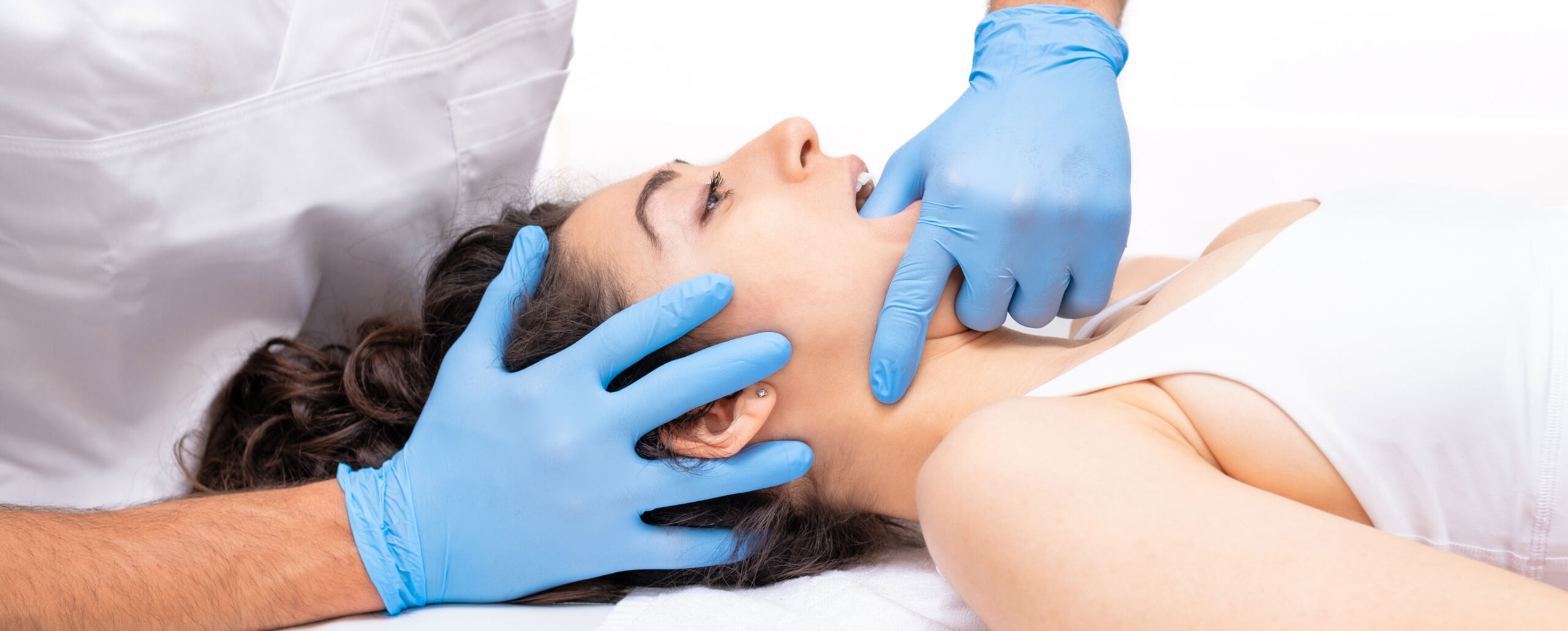
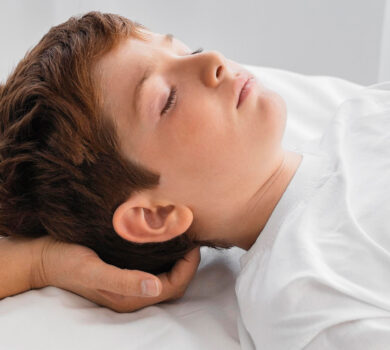
For headaches and neck pain, the most indicated osteopathic treatment is craniosacral therapy.
Craniosacral Therapy
What is it for?
It often happens that symptoms such as headaches, migraines, bruxism, sinusitis, tinnitus, and jaw clicking are caused by a dysfunction of the skull, specifically the cranial bones or the soft tissues within them.
Frequently, lower back pain, irregular cycles, inflammation of the pelvic floor, irritable bowel syndrome, constipation, and back blockages are linked to dysfunctions of the sacrum and pelvis, in which the nerves are also involved.
Based on this principle, the osteopath evaluates during the screening whether there are tensions and blockages in each individual cranial area, in the sacrum in relation to the pelvis, in the lumbar area, and in the pubis.
These are just a few examples of how craniosacral therapy can intervene in resolving common issues.
The origins
Craniosacral therapy originated as a branch of osteopathy through the work of Dr. W. Sutherland, who was a student of the founder of osteopathy, A.T. Still.
After several empirical and anatomical studies on the disarticulated skull and on himself, Sutherland realized how to trigger mechanical lesions on the skull with strong stresses, and what the consequences were on the human body.
This process aimed to replicate the mechanical and membranous traumas that the craniosacral system can suffer due to an accident, a bad fall, or a head injury, and the resulting pathophysiological mechanisms.
Frequently, lower back pain, irregular cycles, inflammation of the pelvic floor, irritable bowel syndrome, constipation, and back blockages are linked to dysfunctions of the sacrum and pelvis, in which the nerves are also involved.
Based on this principle, the osteopath evaluates during the screening whether there are tensions and blockages in each individual cranial area, in the sacrum in relation to the pelvis, in the lumbar area, and in the pubis.
These are just a few examples of how craniosacral therapy can intervene in resolving common issues.
The respiratory mechanism
Sutherland discovered the centrality of the primary respiratory mechanism, namely how the vitality of the fluid contained in the spinal cord affects the well-being of the brain and nerves throughout the body.
The movement of fluids in the craniosacral axis depends heavily on trauma, stress, fatigue, and lifestyle; in fact, treating this system means ensuring the health of the individual.
The therapy is performed by manipulating the cranial bones, the sacrum, or both, to restore the correct mechanism of the axis and ensure mobility and fluidity of movement.
As opposite and extreme poles of the spinal column, both structures must function correctly to determine the organism’s homeostatic vital functions and be in synchrony with each other.
The benefits of the cranial approach for both infants and adults are widely documented and proven today.
Conditions that can be treated
- Headaches
- Stress
- Head trauma
- Neck pain
- Endocrine imbalances
- Respiratory allergies
- Sinusitis
- Tinnitus
- Jaw clicking
- Bruxism
- Dizziness
- Chronic pain
- Psychosomatic problems
Schedule an appointment and we will determine together if Craniosacral Therapy is right for you
From the blog
What is craniosacral therapy?
Craniosacral therapy is a branch of osteopathic medicine based on the microanatomical study of the
Read MoreVagus nerve: reducing stress with osteopathy
As we know, stress negatively affects our health, and 'technically' translates into an imbalance between
Read MoreBruxism: More Than Just a Mouthguard
WHAT IS BRUXISM? Bruxism is a very common condition in which the individual clenches their
Read More